Elmer T. Lee Goes Uncut and Booker's Pours a Second Rye
Buffalo Trace bottles Elmer T. Lee at barrel proof for the first time at $99.99, Booker's returns to rye with an apple brandy finish, Four Roses dates its oldest blend yet, and the country's biggest distributor pays $12.5 million.
On This Page
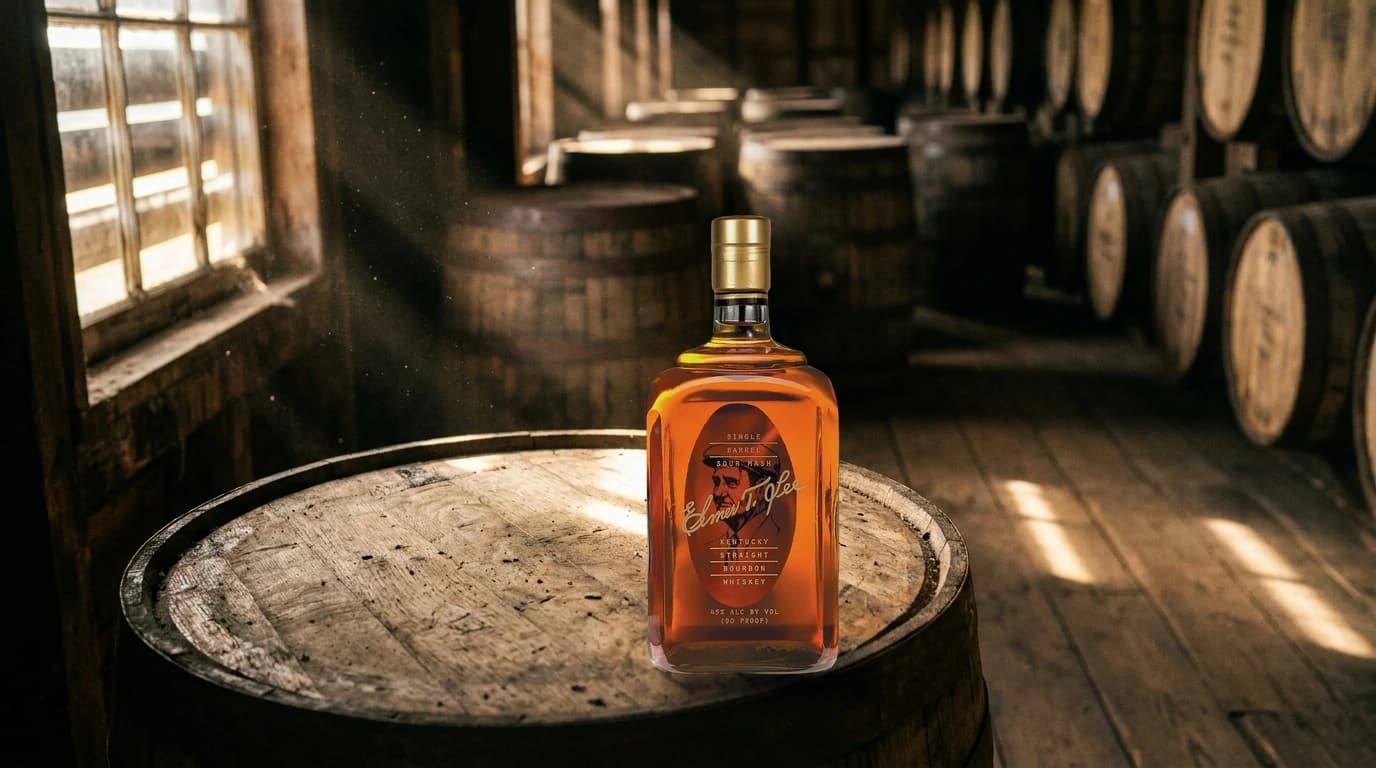
Buffalo Trace spent forty years bottling Elmer T. Lee at 90 proof. This week it announced it will bottle him at whatever the barrel says, for less than a hundred dollars, and hand the bottles out by drawing. Booker's went back to rye for only the second time in its history and did something strange to it. Four Roses put a date on its oldest blend yet. And the largest alcohol distributor in the country quietly agreed to pay $12.5 million over how bottles end up on shelves in the first place.
- Elmer T. Lee 40th Anniversary Edition is the first uncut, unfiltered Elmer T. Lee: 124.8 to 138.6 proof depending on the barrel, $99.99, distributed by drawing rather than allocation12
- Booker's The Reserves 2026 is the brand's second rye ever, 125.1 proof, finished in apple brandy barrels and infused with cinnamon, $129.9934
- Four Roses dated its 2026 Limited Edition Small Batch for October 10: 109.2 proof, 14 to 23 years old, roughly 16,800 bottles at $24956
- Southern Glazer's agreed to pay $12.5 million to resolve a federal bribery investigation into payments for retail shelf placement, with five former executives still facing charges78
- Jack Daniel's American Single Malt went nationwide at $69 after years as a duty-free exclusive9
Track the bottles you are actually hunting
Set up a watchlistElmer T. Lee has been a 90-proof single barrel since 1986. For the 40th anniversary, Buffalo Trace is releasing it uncut and unfiltered for the first time, at 124.8 to 138.6 proof depending on which barrel you draw, with a suggested price of $99.99 for a 750ml12.
Two things about that are unusual, and the price is the smaller one. The larger is the distribution. This is not going to retailers on allocation. Buffalo Trace is running a bottle drawing through its own gift shop: an independent partner selects names at random on September 22, every entrant is told the outcome either way, and anyone selected has from September 28 through October 11 to come to the distillery in Frankfort during visitor hours and buy their bottle in person110.
That design is doing something deliberate. An allocated release sent through distributors is a lottery too, just an opaque one run by strangers, where your odds depend on which store list you got on in August. A named drawing with a published window and a pickup requirement is the same scarcity with the flipping economics turned down: you cannot enter from a warehouse, and you have to physically stand in Frankfort to collect. It will not stop the secondary market. It does make the first sale traceable to a person, which is more than most allocated bottles can say.
A single barrel bottled at barrel proof has no batch to hide behind. Standard Elmer T. Lee is proofed down to 90, which smooths the variation between barrels into a house style. At 124.8 on one barrel and 138.6 on another, two bottles from this release are genuinely different whiskeys, and the proof printed on your label is the only thing telling you which one you got.
If this is your first run at a distillery-direct release, the groundwork is the same as we covered in prepping for fall allocation season: the entry window is the whole game, and a bottle you can drive to is worth more attention than one you are waiting on a store to call you about.
Booker's has released exactly one rye in its history: Big Time Batch, in 2016. The Reserves 2026 is the second4. It is a Kentucky straight rye aged six years, two months and 23 days, bottled at 125.1 proof, with a suggested price of $129.9934.
Then it gets odd. The whiskey is finished in apple brandy barrels and infused with cinnamon3. Booker's built its reputation on the opposite of that: uncut, unfiltered, undecorated, a barrel-proof bourbon with nothing done to it. A cinnamon infusion on a Booker's label is a genuine departure, and it belongs to The Reserves collection rather than the numbered quarterly batches, which is the brand's way of signaling that the rules are different here. Eighth-generation Beam family master distiller Freddie Noe developed it, alongside Little Book "The Infinite" Edition III announced the same week3.
Whether that lands is a matter of taste, and the 125.1 proof means the cinnamon has a lot of alcohol to hide behind or fight with. What is not a matter of taste is the trend. Between this and the apple brandy finish, two of the year's most recognizable barrel-proof labels are now selling flavored expressions at premium prices, and the argument for paying up has shifted from age to intervention.
The 19th annual Four Roses Limited Edition Small Batch arrives October 10, non-chill filtered at 109.2 proof, at $249 for roughly 16,800 bottles56. The blend is four batches across three of the distillery's ten recipes: a 14-year OBSK, a 14-year OESK, a 15-year OESV, and a 23-year OESK5.
That 23-year component is the headline, and it is the oldest whiskey Four Roses has put into this release. If the recipe codes mean nothing to you, they are worth ten minutes: each letter set describes a mash bill and a yeast strain, and they are the clearest example in American whiskey of a distillery telling you exactly what is in the bottle. Our guide to reading a bourbon label covers what the rest of the type on a front label is and is not promising you.
At $249 this is priced like an allocated bottle and produced like one, but 16,800 bottles is a real number. Compared against the rest of the fall calendar, it is one of the few age-stated releases this season where the age is the actual product rather than the marketing.
Southern Glazer's Wine and Spirits, the largest alcohol distributor in the United States, entered a non-prosecution agreement with the U.S. Attorney's Office for the Northern District of California and agreed to pay $12.5 million in penalties. Federal prosecutors said the company spent years bribing employees of alcohol retailers, including chain grocery stores, to secure favorable shelf placement, and that several company vice presidents participated and helped falsify documents to conceal it78. Five former executives still face criminal charges. The agreement was announced September 10 and went largely unremarked while the trade press covered festival week7.
This is the least glamorous item here and the one most likely to affect what you can actually buy. Every conversation about allocation assumes the shelf is a neutral surface: bottles arrive, stores decide, enthusiasts hunt. A bribery case about paid placement at the largest distributor in the country says the surface was not always neutral. It does not explain why you cannot find a particular bourbon, and nobody should stretch it that far. It is a documented reminder that distribution is a business with its own incentives sitting between the distillery and you, and that those incentives are not always the ones printed on the shelf talker.
October is when the fall calendar stops being announcements and starts being bottles.
September 22: the Elmer T. Lee drawing closes and names are selected. If you entered, you will hear either way1.
September 28 to October 11: the Elmer T. Lee pickup window at the distillery in Frankfort. This one requires showing up1.
October 10: Four Roses Limited Edition Small Batch reaches select retailers and the Lawrenceburg visitor centers5.
Through October and November: the Van Winkle and Antique Collection bottles announced earlier this month begin reaching retail. We covered the 2026 Van Winkle pricing and the Parker's Heritage 20th edition last week, and the prices on that sheet are the ones your store will be working from.
The thing worth watching underneath all of it is the drawing format. If Buffalo Trace's gift shop lottery goes smoothly for a release this visible, expect more distilleries to move allocated bottles away from distributor lists and toward direct drawings, because the distillery captures the goodwill instead of the flipper capturing the margin. That would be the most consequential change to bourbon hunting in a decade, and it would have started with a 40th anniversary bottle that cost less than a hundred dollars.
Drink responsibly, and only if you are 21 or older.
Sources & methodology10 sources
Every claim in this issue links to its source. Reporting draws on distiller announcements, regulators and trade outlets, and prices are suggested retail at the time of publication.
Footnotes
-
Breaking Bourbon, "Buffalo Trace Distillery Honors 40 Years of Elmer T. Lee Bourbon With First-Ever Uncut and Unfiltered Offering," September 2026 ↩ ↩2 ↩3 ↩4 ↩5
-
Whisky Advocate, "Elmer T. Lee 40th Anniversary Edition Bourbon Arrives Uncut, and Only by Lottery," September 2026 ↩ ↩2
-
The Whiskey Wash, "James B. Beam Distilling Co. Launches Booker's The Reserves 2026 Rye & Little Book Edition III," September 2026 ↩ ↩2 ↩3 ↩4
-
VinePair, "Booker's 'The Reserve 2026' Is Its Second-Ever Rye, Aged in Ex-Brandy Casks," September 2026 ↩ ↩2 ↩3
-
Breaking Bourbon, "Four Roses Set to Launch 2026 Limited Edition Small Batch on October 10," September 2026 ↩ ↩2 ↩3 ↩4
-
The Whiskey Wash, "Four Roses Launches 2026 Limited Edition Small Batch Bourbon," September 2026 ↩ ↩2
-
Distribution Strategy Group, "Southern Glazer's to Pay $12.5 Million to Resolve Federal Bribery Investigation," September 2026 ↩ ↩2 ↩3
-
The Spirits Business, "Southern Glazer's pays $12.5m over alleged bribery," September 2026 ↩ ↩2
-
Gear Patrol, "Jack Daniel's, Buffalo Trace and More Released New Whiskeys You May Have Missed," September 18, 2026 ↩
-
Forbes, "Buffalo Trace Unveils A Historic Bourbon, And We Can All Get A Bottle," September 16, 2026 ↩
More in Industry News

Bourbon News: Lochs of Jura Wins the IWSC and Woodford Turns 30
Lochs of Jura takes the IWSC American Whiskey Trophy, a bonded Old Bardstown wins the Bourbon Trophy, Woodford turns 30, and Copper & Cask goes 10 years.
Bourbon News: King of Kentucky Goes 14 Years and the FTC Settles
Brown-Forman's King of Kentucky returns at 14 years and $399, the FTC settles its pricing case with Southern Glazer's, and Lost Lantern bottles George Dickel.

Bourbon News: Willett Goes Cask Strength and Jefferson's Gets Older
Willett releases Pot Still Reserve at cask strength for $67 twice a year, Jefferson's Reserve gains an 8-year age statement and 96 proof, and Canada is banned.